
VistaLINX Gran Canaria guide
Which Gran Canaria Coast Fits Your Holiday?
Which Gran Canaria coast suits your holiday? Compare the southern resort corridor, southwest bays and Las Palmas by terrain, beaches, promenades and hotel position.
Published 15 September 2026
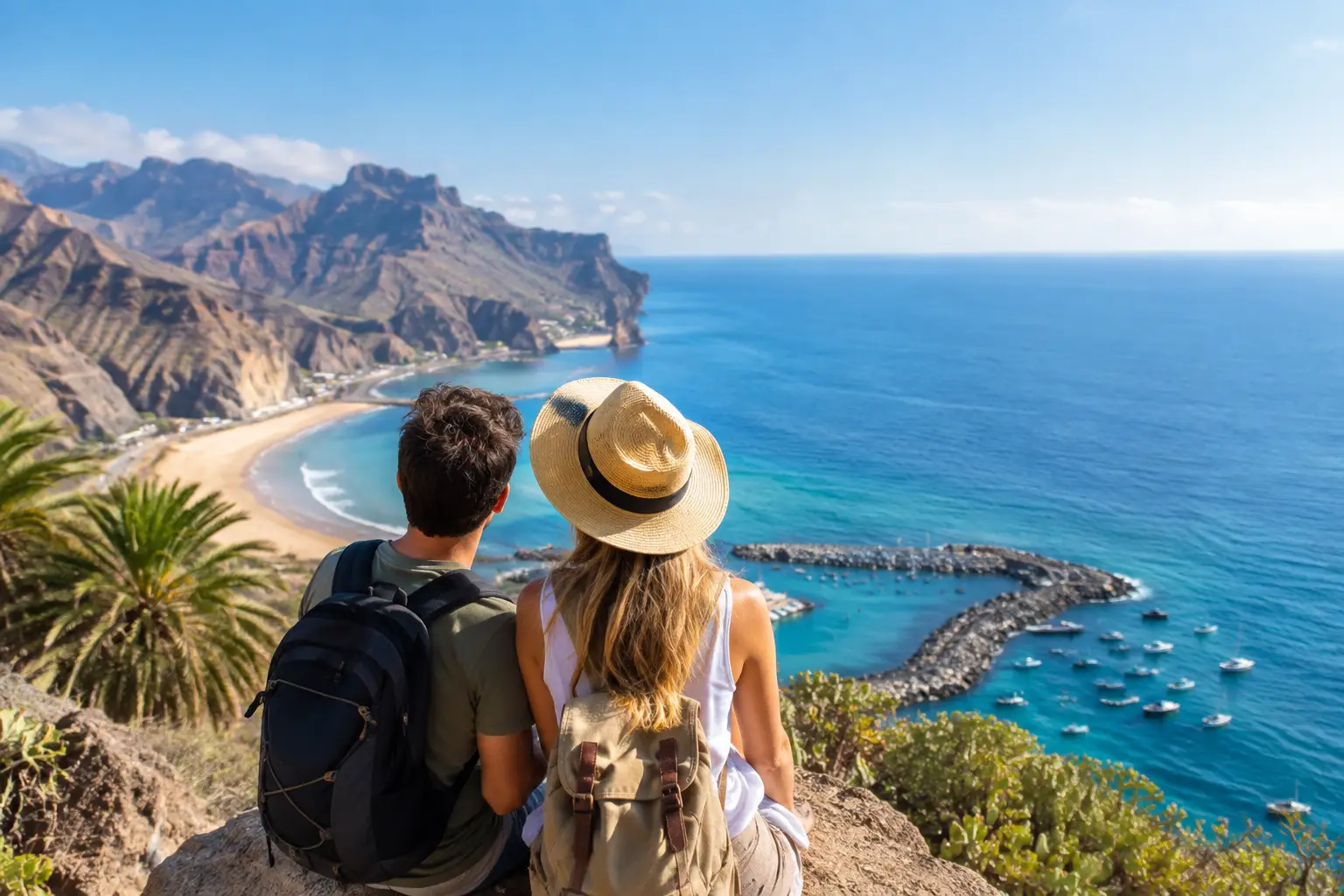
A hotel can be labelled “south Gran Canaria” and still place you in a completely different holiday setting from the one you imagined.
The useful question is not simply which Gran Canaria coast is best.
It is whether you want a long connected resort corridor, a compact bay beneath steep terrain, a coastal town with everyday local life, or an urban beach inside a real city.
Gran Canaria’s visitor areas are not one continuous and interchangeable shoreline.
The southern coast around Playa del Inglés, Maspalomas and Meloneras opens into broad beaches, dunes and extensive resort development.
Farther west, the coast becomes more folded. Bays, valleys, headlands and hillside accommodation shape areas such as Puerto Rico, Amadores, Playa del Cura, Taurito and Puerto de Mogán.
Arguineguín and Patalavaca offer another variation, combining coastal accommodation with a more lived in local environment.
Las Palmas de Gran Canaria is different again, because the beach sits inside the island’s principal city.
Build a mental map first.
Choose the coastal setting whose everyday geography fits the holiday you want, then narrow the decision to the exact hotel position.
Which Gran Canaria coast works for your holiday?
There is no universally best coast.
The useful comparison is between different ways of using the island.
Do you want to walk between neighbouring resort areas?
Do you want one sheltered bay to organise most of the stay?
Do you want restaurants and local services mixed with everyday town life?
Or do you want an urban beach where the city itself is part of the holiday?
Those questions are more useful than simply comparing north, south, east and west.
The southern resort corridor: broad beaches and more connected resort geography
Bahía Feliz, San Agustín, Playa del Inglés, Maspalomas and Meloneras form a sequence of established visitor areas across the southern side of Gran Canaria.
They are not interchangeable, but compared with much of the southwest coast they generally provide broader resort development and less enclosed coastal geography.
Bahía Feliz
Bahía Feliz sits toward the eastern end of the main southern visitor corridor.
Its resort environment is relatively contained and works best when the hotel itself and the immediate coast provide much of what you need.
It can suit travellers who want a quieter base and do not need an extensive town centre outside the hotel.
The coastline here is more exposed than the protected southwest bays, so choose Bahía Feliz for its overall setting rather than because you expect the same beach experience as Amadores or Puerto de Mogán.
San Agustín
San Agustín has a more established and lower key resort character.
Its beaches, residential streets and seafront connections create a different rhythm from Playa del Inglés immediately to the west.
Hotel position remains important.
A property near the coast and promenade can support an easy daily walking pattern, while accommodation farther inland or higher above the shore creates another experience.
Playa del Inglés
Playa del Inglés is the largest and most varied resort environment in this southern sequence.
Its strength is choice.
Beach frontage, commercial centres, restaurants, nightlife and accommodation are distributed across a substantial built up area.
That makes it useful for travellers who want many options within one resort.
The tradeoff is that the name “Playa del Inglés” does not tell you enough about the hotel position.
One property may connect naturally with the beach.
Another may sit closer to nightlife and commercial areas.
Another may relate more strongly to the Maspalomas Dunes.
See the exact location before deciding.
Explore Playa del Inglés in 360°
Maspalomas
Maspalomas shifts the emphasis towards dunes, broad beach space, golf areas and more dispersed accommodation.
The famous dune landscape occupies a large part of the coastal environment, so two Maspalomas hotels can create very different daily routines.
Accommodation near the lighthouse gives you a strong relationship with the beach, dunes and Meloneras.
A property farther inland can provide quieter resort surroundings but make the coastline something you deliberately travel towards.
Meloneras
Meloneras begins around the Maspalomas lighthouse and continues west along a developed seafront promenade.
Its defining feature is not the dunes themselves but the relationship between hotels, restaurants, coastal walking and the promenade.
That makes Meloneras particularly attractive when evening walks and an organised seafront environment matter as much as the beach.
The farther west you stay, the less immediate the dunes become and the more strongly Meloneras itself defines the holiday.
The southwest: bays, valleys and hotel elevation
West of the broad southern resort corridor, the physical geography changes.
The coast becomes more fragmented.
Individual bays are separated by headlands and steep terrain, while hotels frequently occupy slopes above the shoreline.
This creates dramatic views, but it also makes hotel position especially important.
A property can be very close to a beach in straight line distance while requiring a much longer road or pedestrian route.
Arguineguín and Patalavaca: coastal town meets holiday accommodation
Arguineguín provides a useful transition into the southwest.
It is a functioning coastal town rather than a purpose built resort contained around one beach.
Local services, restaurants, harbour activity and everyday residential life sit alongside visitor accommodation.
That can suit travellers who want more than a resort environment.
Patalavaca is smaller and more strongly oriented towards the coast and accommodation.
It works well when you want beach access while remaining close to the services and local life of Arguineguín.
Anfi del Mar: compact and beach focused
Anfi del Mar creates a more contained holiday environment.
Its beach, marina and surrounding resort facilities sit close together, making the immediate setting relatively easy to understand.
It can work particularly well when much of the holiday will happen locally.
The compromise is that it does not provide the same town environment as Arguineguín or the larger resort centre of Puerto Rico.
Puerto Rico: practical centre, steep surrounding terrain
Puerto Rico has one of the southwest coast’s more substantial resort centres.
The beach, marina, restaurants and services are concentrated around the lower valley.
Accommodation then rises along the surrounding slopes.
That creates the central Puerto Rico decision.
Stay lower when walking convenience matters.
Stay higher when views or the hotel environment matter more and you are comfortable combining walking with taxis or other transport.
Amadores: let the bay organise the holiday
Amadores is more clearly centred on its beach.
That makes it attractive when swimming, sunbathing and a simple beachfront routine are the main priorities.
Accommodation also extends above the bay, however.
A hotel overlooking Amadores is not necessarily an easy walk from the sand.
The route matters as much as the view.
Playa del Cura: smaller and more contained
Playa del Cura offers a smaller resort environment between the larger neighbouring areas.
It can suit travellers who want a quieter base and are happy with less immediate variety.
As elsewhere on the southwest coast, compact does not necessarily mean flat.
Hotel elevation and the relationship with the coastal road should be checked carefully.
Explore Playa del Cura in 360°
Taurito: a resort inside a valley
Taurito is strongly shaped by its narrow valley setting.
Accommodation, beach and resort facilities occupy a geographically contained environment surrounded by steep terrain.
That can appeal when you want the hotel and immediate resort to organise much of the stay.
It is less suitable when your ideal holiday depends on walking through several different neighbourhoods every evening.
Puerto de Mogán: harbour, beach and a recognisable centre
Puerto de Mogán differs again.
Its marina, harbour, pedestrian streets, beach and restaurants create a more recognisable local centre than many of the resort bays farther east.
It works particularly well when you want somewhere compact enough to understand quickly but varied enough to explore on foot.
The tradeoff is its position toward the western end of the main resort coast.
If you expect to move repeatedly between the large southern resort areas, another base may be more practical.
Explore Puerto de Mogán in 360°
Las Palmas: choose a city that also has a beach
Las Palmas de Gran Canaria is not simply another coastal resort.
It is the island’s principal city.
Las Canteras beach sits within an urban environment of residential neighbourhoods, restaurants, shops, cultural attractions and public transport.
Choose Las Palmas when city life is part of the reason for travelling.
Do not choose it expecting the same pool centred resort environment as Maspalomas, Meloneras or the southwest bays.
The distinction is simple.
In Las Palmas, the beach is part of the city.
In the southern resorts, much of the surrounding environment exists because of the holiday economy.
Explore Las Palmas de Gran Canaria in 360°
Choose the area first, then the hotel
Coast selection only gets you halfway to the decision.
Once you have identified the environment you prefer, inspect the exact hotel.
Look at:
the hotel entrance
the route to the beach
the terrain between hotel and coast
the nearest promenade
restaurants and supermarkets
main roads
neighbouring development
the journeys you expect to repeat every day
A hotel can carry the right resort name and still sit in the wrong part of it for your holiday.
This is where visual context becomes more useful than a list of facilities.
VistaLINX lets you compare beaches, roads, resort zones, hotel positions and surrounding terrain before moving on to the booking decision.
See where to stay in Gran Canaria before choosing a hotel
Explore the Areas in 360°
For broad southern resort geography:
Explore Playa del Inglés in 360°
For southwest bays and valleys:
Explore Playa del Cura in 360°
For coastal town and harbour settings:
Explore Puerto de Mogán in 360°
For a city and beach combination:
Explore Las Palmas de Gran Canaria in 360°
Which Gran Canaria coast is best for first time visitors?
There is no universal answer.
Playa del Inglés offers the greatest variety within one large resort environment.
Maspalomas and Meloneras provide more defined landscape and promenade experiences.
Puerto Rico gives you a substantial southwest resort centre.
Puerto de Mogán offers a compact harbour setting.
Las Palmas works best when city life matters as much as the beach.
The right answer depends on what you want outside the hotel.
Which Gran Canaria coast is best without a car?
Several areas can work well without a car when the hotel position is chosen carefully.
Meloneras, central Playa del Inglés, lower Puerto Rico, Puerto de Mogán and Las Palmas can each support very different car free holiday patterns.
The important variable is not only the resort.
It is the relationship between the hotel, the places you expect to use and the transport you are comfortable relying on.
The practical choice
Choose the southern resort corridor when broad beaches, connected resort areas and extensive holiday infrastructure matter.
Choose the southwest when bays, dramatic terrain and more contained resort environments appeal.
Choose Arguineguín when you want more local town life.
Choose Puerto de Mogán when a compact harbour setting is the priority.
Choose Las Palmas when you want a city that happens to have one of the island’s major beaches.
Then choose the hotel.
The best coast is not the one with the most famous name.
It is the one whose everyday geography matches the holiday you actually want.
See the context
Explore Gran Canaria visually
Use VistaLINX to compare resort areas, hotel zones, beaches, promenades and terrain before choosing where to stay.