
VistaLINX Gran Canaria guide
Where to Stay in Gran Canaria for Your Holiday
Compare Gran Canaria resort areas by beach access, walkability, scenery and atmosphere, then choose the right area before choosing your hotel.
Published 29 August 2026
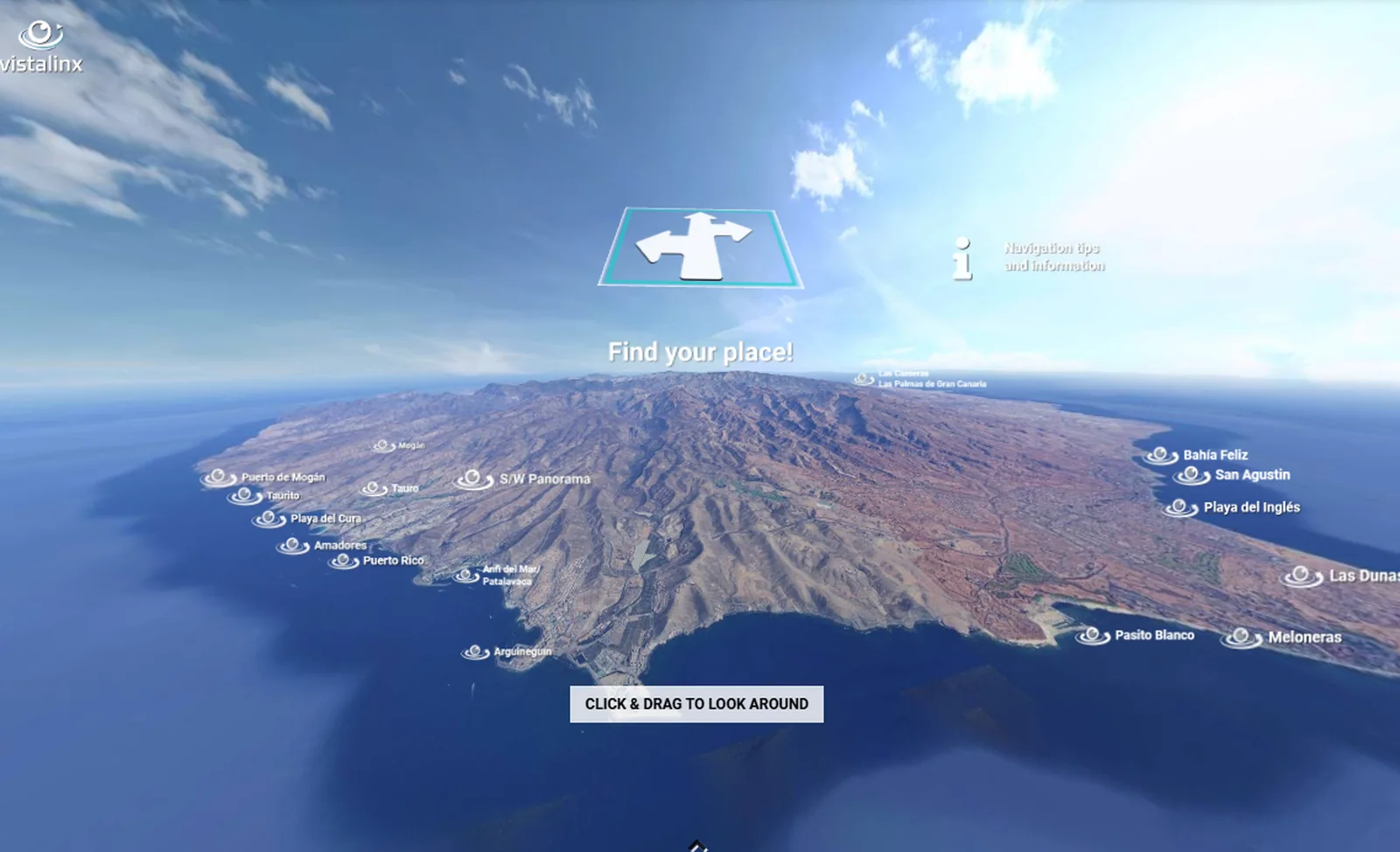
Gran Canaria is often described as one beach destination, but choosing where to stay in Gran Canaria is really a choice between several distinct coastal environments. A hotel can be close to the sea yet feel suburban, sit beside a superb promenade but be far from the island’s most sheltered swimming bays, or occupy a dramatic hillside setting with limited level walking. Build a mental map first, then compare individual hotels within the area that suits the way you want to spend your days.
The main decision is not simply south versus north. It is whether you prefer long sandy beaches and extensive resort facilities, a quieter seafront town, sheltered coves, a marina atmosphere, or the urban energy of Las Palmas de Gran Canaria. Distances are manageable by car, but the difference in day-to-day setting is considerable.
Where to stay in Gran Canaria by resort character
Maspalomas and Meloneras for space, beaches and polished surroundings
Maspalomas and Meloneras occupy the southern tip of the island, beside the dunes and the broad sands of Maspalomas. This is a strong choice for travellers who want an established holiday base with room to walk, a reliable sunny climate and a wide choice of large hotels.
Maspalomas is spread out rather than compact. The dunes, golf courses, detached hotel zones and wide roads create a feeling of space, but they also mean that a hotel labelled ‘Maspalomas’ may not be within easy walking distance of the beach or evening restaurants. Check the route, not just the straight-line distance. Some properties are better suited to a pool-centred holiday with occasional taxis; others connect more naturally to the promenade and lighthouse area. Explore Maspalomas in 360°: Explore Maspalomas in 360°
Meloneras, immediately west of the Maspalomas lighthouse, feels more polished and self-contained. Its seafront promenade links hotels, restaurants and small shopping areas, while the coast is rockier in places than the main Maspalomas beach. It tends to suit couples, adults seeking a calmer resort rhythm and families who value well-kept hotel surroundings. It is less useful for travellers hoping for a traditional Canarian town centre outside the resort development. Explore Meloneras in 360°: Explore Meloneras in 360°
Playa del Inglés for a livelier, more walkable resort
Playa del Inglés is the south coast’s busiest all-round resort. It has a huge beach backed by dunes, dense accommodation, supermarkets, bars, restaurants and a more active evening scene than Meloneras. For travellers who prefer having practical services nearby, it can be one of the easiest places to base themselves.
Its trade-off is variety of setting. The resort developed in stages, so streets and hotel areas do not have one consistent character. A hotel near the beach and the southern promenade can feel very different from one closer to the commercial centres or the inland edge of town. The terrain also changes: routes towards the seafront can involve slopes, and the beach itself is reached by several access paths rather than one central waterfront.
Choose Playa del Inglés if beach time, choice and independence matter more than a small-scale atmosphere. It works particularly well for couples, groups of friends and repeat visitors who know they will use restaurants beyond their hotel. Explore Playa del Inglés in 360°: Explore Playa del Inglés in 360°
San Agustín for a quieter south-coast base
East of Playa del Inglés, San Agustín is lower-key, more residential in feel and generally less busy after dark. The beach is smaller and darker in sand than Maspalomas, but the coastal setting is calmer, with a pleasant seafront route connecting parts of the area towards Playa del Inglés.
This is often a sensible option for couples and families who want to remain close to the facilities of the main southern resorts without staying in their centre. It is also worth considering if you prefer a hotel close to the coast over one close to nightlife. The limitation is choice: there are fewer restaurants and evening venues immediately around many hotels, so location within San Agustín matters more. Explore San Agustin in 360°: Explore San Agustín in 360°
Puerto Rico and Amadores for sheltered bays and resort convenience
On the southwest coast, Puerto Rico and Amadores are compact holiday areas built around sheltered beaches and steep volcanic slopes. The sea is often calmer than on more open stretches of coast, which makes this part of the island attractive for families with younger children and travellers prioritising easy swimming.
Puerto Rico is the busier and more practical of the two. It has a marina, a beach, shopping and a substantial concentration of flats and hotels. The physical setting is important here: much of the accommodation climbs the hillsides. Sea views can be excellent, but walking back from the beach, harbour or restaurants may involve significant gradients. A taxi, hotel shuttle or hire car can make a hillside property much more convenient. Explore Puerto Rico in 360°: Explore Puerto Rico in 360°
Amadores sits just west of Puerto Rico around a purpose-built, pale-sand bay. It feels more focused on the beach and seafront than on town life. Many visitors like the protected water and straightforward beach day, while others find the surrounding development too resort-led for an entire week. It is best for a relaxed, sun-and-swim holiday rather than exploring on foot every evening. Explore Amadores in 360°: Explore Amadores in 360°
Arguineguín for a lived-in coastal town
Arguineguín has a more local, working-town character than the purpose-built resorts nearby. It has a harbour, everyday services, a long seafront and a mix of visitors, residents and second-home owners. Beaches here are smaller than at Maspalomas or Amadores, but the town can feel more grounded and less enclosed by hotel compounds.
Stay here if you want cafés, supermarkets and restaurants that serve a wider local population, alongside access to the southwest coast. The newer shoreline around Patalavaca and the Anfi area offers brighter sand and a more resort-oriented beach experience, but these places are not interchangeable with central Arguineguín. Compare the exact waterfront, slope and nearest amenities before booking. Explore Arguineguín in 360°: Explore Arguineguín in 360°
Puerto de Mogán for harbour scenery and a slower pace
Puerto de Mogán lies at the southwest end of the main resort coast. Its marina, low-rise streets, canal-side planting and surrounding cliffs give it a more picturesque setting than the larger resorts. The beach is small but sheltered, and the village is easy to walk around once you are in its central area.
It suits couples, independent travellers and anyone who values scenery and a quieter evening over a wide range of nightlife or large shopping centres. It can also feel more removed. Transfers from the airport are longer, and travelling to the beaches and towns farther east takes time. This is a positive if you want to settle into one place; less so if you want frequent variety without hiring a car. Explore Puerto de Mogán in 360°: Explore Puerto de Mogán in 360°
Las Palmas de Gran Canaria for a city-and-beach stay
Las Palmas de Gran Canaria is not a southern resort and should be considered as a different type of holiday. The city combines Las Canteras beach, neighbourhood restaurants, shops, museums and daily urban life. Stay near Las Canteras if you want the beach within walking distance of a real city rather than a resort strip.
The beach is long, lively and useful for swimming in many conditions, with a natural reef protecting parts of the bay. Yet this is a city break with a beach, not a self-contained sun resort. Accommodation is more likely to be a hotel or flat in a built-up street, and you will encounter traffic, city noise and less of the all-inclusive pool environment found in the south.
Las Palmas is particularly good for independent travellers, couples who enjoy eating out, and visitors travelling outside the peak winter-sun period. It is also a practical choice if you want to explore the north and interior of the island. For the warmest, driest conditions, however, the south and southwest usually have the advantage. Explore Las Palmas de Gran Canaria in 360°: Explore Las Palmas de Gran Canaria in 360°
Choose the setting before the hotel
Once you have narrowed the island down to two or three areas, assess a hotel in its immediate context. Ask whether the beach route is level and pleasant, whether the nearest restaurants are genuinely walkable, and whether the pool, promenade, harbour or town centre is the part of the area you will actually use. A sea view from a hillside can be worth the climb for some travellers and an avoidable daily inconvenience for others.
Also separate an area’s name from its real position. Large resort labels can cover several kilometres of coastline and inland development. A hotel advertised as being in a beach resort may sit behind a main road, above a steep slope or closer to a golf course than to the shore. Visual comparison is useful at this stage: VistaLINX is designed to help you see how beaches, hotel zones, promenades and terrain connect before moving on to individual accommodation.
There is no universally best base on Gran Canaria. Choose the stretch of coast whose ordinary moments - the walk to breakfast, the route to the sea, the evenings outside the hotel - look right for your holiday. That decision will usually matter more than a small difference in hotel rating.
See the context
Explore Gran Canaria visually
Use VistaLINX to compare resort areas, hotel zones, beaches, promenades and terrain before choosing where to stay.