
VistaLINX Gran Canaria guide
7 Quiet Areas in Gran Canaria for a Relaxed Holiday
Compare quiet areas in Gran Canaria by beach setting, walking, services and surroundings, so you can choose a resort area before selecting a hotel.
Published 2 September 2026
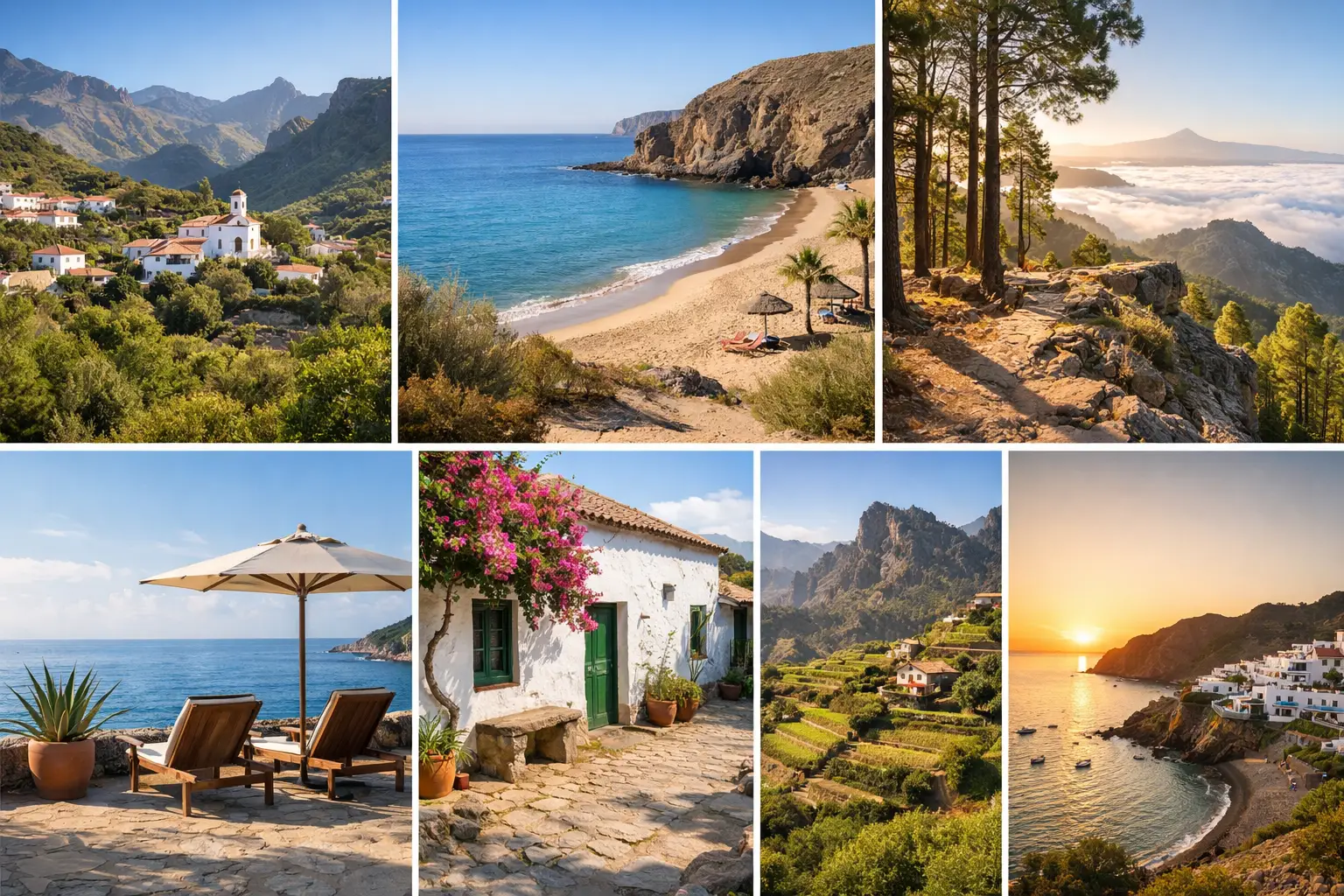
A quiet stay in Gran Canaria is rarely about finding an empty coastline. It is more often about choosing the right relationship between your hotel, the beach, the promenade and the nearest busy resort centre.
The quiet areas in Gran Canaria tend to sit at the edges of larger holiday zones, around smaller coastal settlements or beside more contained beaches. That can mean calmer evenings and less passing footfall, but it can also mean fewer restaurants, steeper walking routes or greater reliance on taxis.
Build a mental map before comparing hotels.
The south and southwest contain Gran Canaria’s largest concentration of holiday accommodation, but the atmosphere changes considerably over relatively short distances. Two hotels marketed under the same broad resort name can provide completely different experiences once you see the surrounding roads, terrain, beach access and neighbouring development.
For a broader comparison of the island’s resort areas, start here:
https://grancanaria.vistalinx.com/gran-canaria-resorts
What does “quiet” mean in Gran Canaria?
For most travellers, quiet does not mean remote.
It may simply mean being able to return from the beach without passing late night bars, heavy traffic or a crowded commercial centre. It can mean a smaller promenade, residential surroundings, a sheltered coastal setting or a hotel positioned away from the centre of the resort.
There are several different versions of quiet:
A genuinely small destination with limited nightlife.
A calmer section of a larger resort.
A hotel with space around it, even though the wider resort is active.
These are not the same experience.
The trade off matters too. Some peaceful coastal locations have only a compact choice of cafés, shops and restaurants. Others feel calm in the evening but still attract plenty of beach visitors during the day.
The right choice depends on what you want to be close to, and what you would rather leave behind.
Quiet areas in Gran Canaria worth comparing
Puerto de Mogán: harbour atmosphere and slower evenings
Puerto de Mogán sits at the western end of the main southwest resort coast and is one of the clearest choices for travellers who value a contained setting over extensive nightlife.
Its marina, pedestrian streets, low rise development and mountain backdrop create an atmosphere very different from Playa del Inglés or central Puerto Rico.
The beach is small but sandy and sheltered, while restaurants cluster around the harbour, beach and surrounding streets.
It works particularly well for couples, independent travellers and families who are comfortable with quieter evenings.
Puerto de Mogán is not isolated, but it is compact. Travellers staying for a longer period may find the choice of evening venues more limited than in larger resorts. That is precisely part of its appeal for many visitors.
Explore Puerto de Mogán in 360°
Playa del Cura: quieter southwest resort setting
Playa del Cura lies between Amadores and the Tauro coastline on the southwest coast.
It can be a useful option for travellers who want the climate and coastal setting of this part of Gran Canaria without staying in the middle of Puerto Rico.
The area has a compact beach, accommodation, a small commercial centre and everyday services. The atmosphere is generally more subdued than the larger resort centres nearby.
That quieter setting comes with less choice. There are fewer restaurants, shops and evening venues within easy walking distance.
The surrounding terrain also rises sharply in places, so the exact hotel position matters. Do not assume that every property shown close to the beach on a map provides an easy level walk.
Explore Playa del Cura in 360°
Tauro: space and a more residential feel
Tauro lies immediately west of Playa del Cura and has a more spread out character than the densely developed resort valleys farther east.
Parts of the area feel residential, with villas, apartments and accommodation positioned away from a major nightlife centre.
That can work well for travellers who value space, self catering and accommodation that feels separate from a conventional resort strip.
The trade off is walkability and choice.
Restaurants, larger supermarkets and evening variety may require more planning than in Puerto Rico or Playa del Inglés. Tauro is therefore better suited to travellers who see the accommodation itself as an important part of the holiday and do not expect to walk somewhere different every evening.
Amadores: quiet evenings close to a popular beach
Amadores is known for its broad pale beach and sheltered bay, so it should not be confused with a secluded destination.
During the day the beachfront can be active.
However, accommodation away from the central seafront and on the surrounding slopes can provide a much calmer evening environment than central Puerto Rico.
This creates an interesting compromise: easy access to a substantial beach and waterfront restaurants, while the hotel itself may sit in a quieter setting.
The important issue is vertical distance.
Many properties are positioned above the bay. They may have excellent views but require a significant climb from the beach.
Families with pushchairs, travellers with reduced mobility and anyone expecting to walk frequently should assess the real route rather than the straight line distance.
Patalavaca: quieter coast between Arguineguín and Anfi del Mar
Patalavaca lies immediately west of Arguineguín, between the town and Anfi del Mar.
It offers a compact coastal environment with beaches, apartments, hotels and a seafront route, while remaining close to the everyday services of Arguineguín.
This can make Patalavaca particularly attractive to travellers who want a quieter base without becoming dependent on a large resort complex.
It feels different from both neighbouring areas.
Arguineguín has more everyday town activity and local services, while Anfi del Mar has a more concentrated resort environment.
Patalavaca sits between the two physically and in character.
For comparison, explore neighbouring Arguineguín:
And Anfi del Mar:
San Agustín: quieter surroundings with access to the wider south
San Agustín is one of the most practical quiet alternatives on the eastern side of Gran Canaria’s main southern resort coast.
It lies immediately east of Playa del Inglés but generally has a calmer, more residential atmosphere.
Its beaches are smaller and darker than Maspalomas or Playa del Inglés, while the coastal promenade, established hotels and nearby services make it relatively easy to use as a base.
The main advantage is that quiet does not mean disconnected.
You remain close to Playa del Inglés and the wider southern resort area, while the immediate surroundings can feel significantly calmer in the evening.
Restaurant and entertainment choice is more limited than in Playa del Inglés, so the exact hotel location still matters.
For couples and families who want a slower rhythm without giving up access to the broader south, San Agustín can provide an excellent balance.
Bahía Feliz: self contained and lower key
Bahía Feliz lies farther east along the southern coast and has a compact, self contained character.
It tends to attract travellers who are comfortable with a hotel led holiday, watersports and a quieter immediate environment rather than a broad resort centre.
The coastal setting differs from the long sandy beaches farther west. The shoreline is more exposed in places and the beach environment is not the classic Maspalomas or Amadores experience.
That difference is important.
Choose Bahía Feliz because you value space, a contained setting and a quieter base, not because you expect a large sandy resort beach and extensive nightlife.
What about Meloneras, Maspalomas and Puerto Rico?
A quiet hotel can exist inside a larger and more active resort.
This is why the resort name alone is not enough.
Meloneras
Meloneras generally has calmer evenings than central Playa del Inglés and benefits from a long, polished seafront promenade.
However, it contains large hotels, restaurants, retail and regular pedestrian activity.
For many travellers that is the ideal version of quiet: active enough to provide choice, but without being centred on nightlife.
Maspalomas
Maspalomas can feel spacious around the dunes, lighthouse and golf areas.
But the destination covers a large geographical area, and accommodation can sit surprisingly far from the beach or restaurants.
A quiet hotel beside the golf course can provide considerable space, while creating a completely different daily routine from a property beside the lighthouse.
Puerto Rico
Puerto Rico has an active central valley, marina and commercial areas.
At the same time, many hotels sit above the centre or toward the edges of the valley, where the immediate surroundings can be much quieter.
The price of that separation is often gradient.
A peaceful hillside hotel with a panoramic view may require taxis or a substantial uphill walk after dinner.
How to choose the right quiet location before booking
Start with the kind of coastline you want.
If you prefer a small harbour and compact pedestrian environment, compare Puerto de Mogán.
If sheltered pale sand matters most, look at Amadores.
If you prefer a quieter coast connected to everyday town services, compare Patalavaca and Arguineguín.
If you want a calmer base while retaining easy access to the larger southern resorts, San Agustín may provide the best balance.
Then think about your evening routine.
Do you want several restaurants within walking distance?
Are you happy eating in the same compact area?
Will you use taxis occasionally?
Do you want local town life or a self contained resort?
Does quiet mean silence, or simply being away from nightlife?
Finally, compare the immediate hotel setting.
Check:
Whether the route to the beach is level.
Whether there is a pavement or promenade.
How close neighbouring buildings are.
Whether a main road separates the hotel from the coast.
Where the nearest supermarket and bus stop are.
Whether restaurants are genuinely walkable after dark.
A map pin cannot answer all of these questions.
VistaLINX is designed for this stage of planning. Connected views help show how beaches, resort zones, terrain, roads and hotel locations relate before you decide where to stay.
For our broader guide to choosing an area in Gran Canaria:
https://grancanaria.vistalinx.com/where-to-stay-in-gran-canaria
Which quiet area should you choose?
Choose Puerto de Mogán when harbour atmosphere and relaxed evenings matter most.
Choose Playa del Cura when you want a smaller southwest resort close to larger neighbours.
Consider Tauro when space and a more residential environment matter more than walkable nightlife.
Choose Amadores when beach access matters, but you prefer a calmer hotel environment than central Puerto Rico.
Choose Patalavaca when you want a quieter coastal base between local Arguineguín and resort oriented Anfi del Mar.
Choose San Agustín when you want calm surroundings without feeling disconnected from the wider southern resorts.
Choose Bahía Feliz when a compact, hotel led setting suits you better than a large resort centre.
There is no universally quietest place in Gran Canaria.
The right choice is the location where the beach, walking conditions, surroundings and evening options match the rhythm you actually want from the holiday.
A quieter base should make the holiday easier, not narrower.
Explore all Gran Canaria guides:
https://grancanaria.vistalinx.com/guides/
See the context
Explore Gran Canaria visually
Use VistaLINX to compare resort areas, hotel zones, beaches, promenades and terrain before choosing where to stay.