
VistaLINX Gran Canaria guide
How to Plan a Car-Free Holiday in Gran Canaria
Learn how to plan a car free holiday in Gran Canaria: compare walkable bases, bus connections, beach access and the journeys you want to make with ease.
Published 5 October 2026
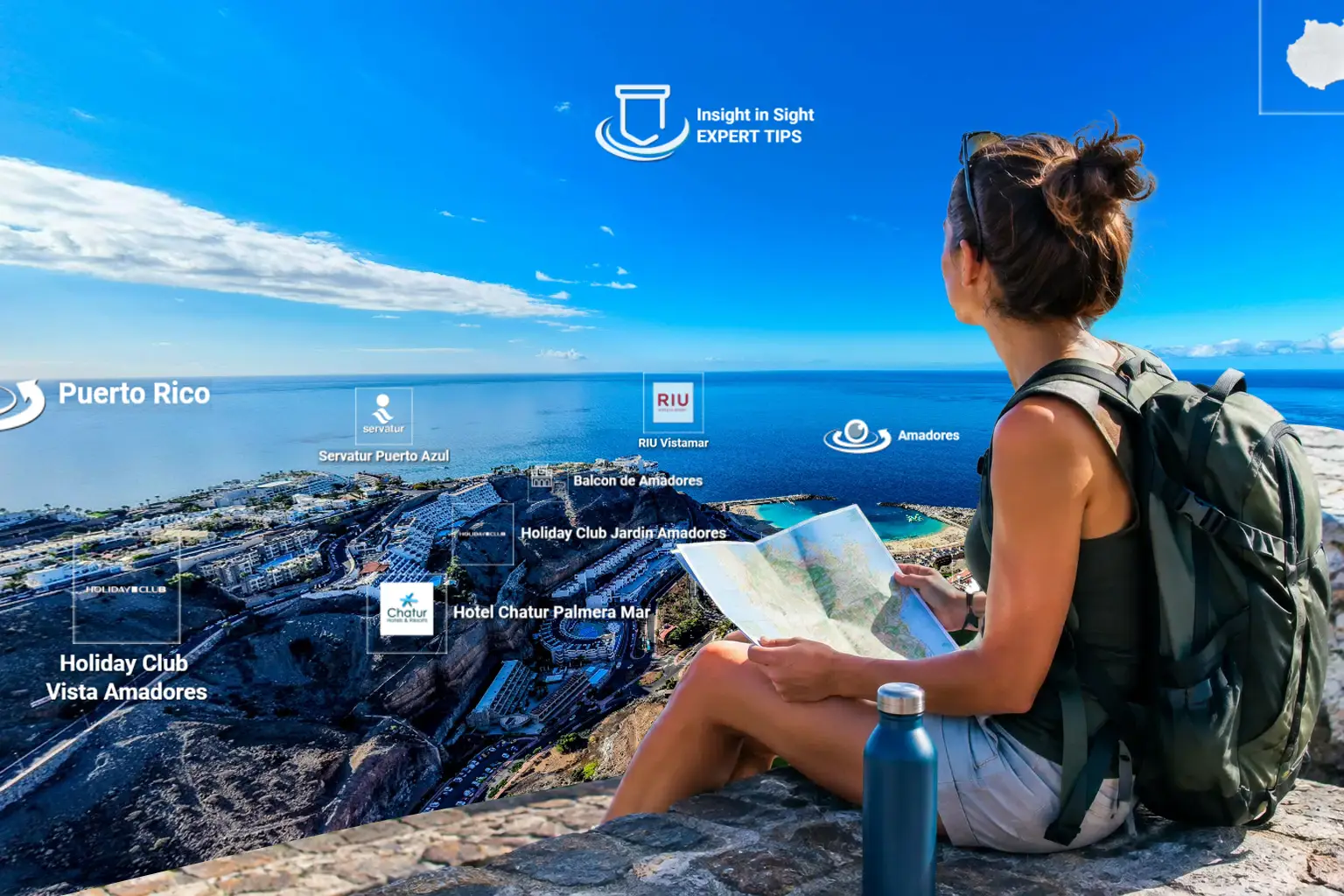
A car-free Gran Canaria holiday is decided less by the island’s overall map than by the few streets around your accommodation. A hotel can appear close to a beach, restaurant strip or bus stop, yet sit above it on a steep road, behind a larger resort complex or at the quieter edge of the area. To understand how to plan a car-free holiday, choose your base first, then examine the routes you expect to make every day.
For many visitors, the southern coast provides the most straightforward car-free choices because resort areas are arranged along connected coastal corridors. But they do not function in the same way. Some are spread along long promenades, some are built into valleys, and some place most services around a compact beach bay. The right choice depends on whether you want to walk locally most days, use buses for wider exploration, or are content to take occasional taxis when the geography becomes less convenient.
How to plan a car-free holiday before choosing a hotel
Start by writing down the journeys that matter to you. A beach-first stay has different requirements from a holiday built around dining out, visiting several resorts or spending time in Las Palmas de Gran Canaria. This sounds obvious, but it prevents a common planning error: choosing a scenic or well-reviewed hotel and only later discovering that everyday movement requires more effort than expected.
Look at four things together: the coastal walking route, the nearest practical road, the location of shops and restaurants, and the position of transport stops relative to the hotel. They are area-level clues, but the exact hotel position still matters. A property near the centre of a resort may support an easy routine on foot, while another in the same named area may involve slopes, crossings or a longer return journey.
Public buses can make a car-free holiday practical for moving between many populated coastal areas and for travelling north, but they should not be treated as a substitute for choosing a convenient base. Schedules, route patterns and stop locations can change, so check current information for the dates of travel. The more your accommodation allows you to reach the beach, meals and basic supplies without a vehicle, the less your holiday depends on timetables.
Taxis are useful as a back-up, particularly for an evening out or a one-way journey that would be awkward on foot. They are not, however, a reason to ignore terrain. If you expect to use one frequently simply to reach the seafront from your hotel, another location may suit your trip better.
Choose the kind of walking you want
A coastal promenade can be valuable, but its usefulness depends on continuity and where it leads. In Playa del Inglés, the built-up resort fabric offers a broad choice of services and a useful base for travellers who value having everyday options nearby. The beach and dunes shape the area, while the exact route from an inland hotel to the coast can vary considerably. It is a practical choice for people who want a larger resort rather than a self-contained bay.
Maspalomas is different. Its wider setting around the dunes, golf areas and resort roads means that hotel context deserves close attention. Some locations work well for a quieter, more spacious-feeling stay, but the walk to the beach, promenade or evening facilities is not uniform across the area. It can suit travellers who are happy to combine walking with buses or taxis rather than expecting every part of the resort to be outside the door.
Meloneras generally appeals to travellers looking for an organised seafront environment with restaurants and resort development along the coast. It can work well without a car when the hotel is positioned close to the promenade, but the inland side of the area can alter the daily walking pattern. Compare the hotel marker with the route to the seafront, not just with the area name.
Compact bays versus long resort corridors
Puerto Rico is built into a valley around its harbour and beach area. That setting creates a clear trade-off for car-free visitors: hotels closer to the waterfront and central services can be convenient, while elevated positions can involve more demanding routes. The view from a hillside property may be appealing, but it does not automatically make it the most practical choice for a holiday centred on independent walking.
Amadores has a more concentrated beach setting than the larger neighbouring resorts. This may suit travellers who want to spend much of their time around one beach and a limited local cluster of facilities. For broader choice, look at the connections towards nearby areas and consider whether you are comfortable using buses or taxis. It depends on how often you expect to leave the immediate bay.
Puerto de Mogán is another distinct option. Its harbour, marina and beach-side setting create a more contained walking environment than the larger southern resorts. It can be a sensible base for visitors who value local atmosphere and do not need a wide range of resort districts on the doorstep. The trade-off is that it sits at the western end of the main south-coast sequence, so repeated trips to central and eastern resort areas can take more planning.
Build your holiday around one main movement pattern
There are three workable approaches. First, choose a self-sufficient area where beach time, meals and evening walks happen locally, then make only occasional day trips. This favours a compact base such as Puerto de Mogán, Amadores or, depending on the exact position, parts of San Agustín.
Second, stay in a larger connected resort and use walking for everyday needs, with buses for day trips. Playa del Inglés can suit this pattern because it offers more than one local zone, although those zones are not interchangeable. Check whether your hotel sits near the facilities you actually intend to use.
Third, choose an area for its particular setting and accept regular taxi use. This can make sense for a hillside hotel, a quieter coastal section or a property with a specific view. It is a valid choice, but it should be deliberate rather than discovered after arrival.
If you are travelling with children, carrying beach equipment, or have limited tolerance for repeated slopes, give extra weight to the return journey. A route that appears manageable on a map can feel very different after a long day outdoors. Equally, couples who enjoy walking may prefer a longer promenade over a resort where everything is concentrated around a single beach.
Explore the areas in 360°
Use the visual context to trace the route between a prospective hotel, the coast, nearby services and the road network. VistaLINX is designed for this area-before-hotel decision: build a mental map first, then judge whether the accommodation’s exact location supports your intended routine.
Explore Playa del Inglés in 360°
Explore Puerto de Mogán in 360°
For a quieter east-side alternative, San Agustín is worth comparing with the busier southern resorts. Its coastal form and local rhythm are different from the larger built-up areas, and the exact position of a hotel relative to the seafront remains central to a car-free stay.
Make the final choice with the return journey in mind
Before booking, test one simple scenario: imagine leaving your hotel in the morning for the beach, returning for a break, going out for dinner and coming back after dark. If all four parts look straightforward for your group, the location is likely doing its job. If each movement depends on a taxi, a steep road or a route you would rather avoid, compare another hotel position or another area.
The best car-free base is not necessarily the resort with the most facilities. It is the one where the journeys you will repeat feel proportionate to the holiday you actually want to have.
See the context
Explore Gran Canaria visually
Use VistaLINX to compare resort areas, hotel zones, beaches, promenades and terrain before choosing where to stay.